
Demonstrator · La Grande-Motte and Saint-Tropez
Shopify as an operations backbone
A fitness operator running two outdoor sites, selling passes rather than products, and admitting people through a door. Commerce, entitlement and physical access as one system rather than three subscriptions.
1. Why this is not a shop🔗
A gym does not sell objects. It sells the right to enter a place for a period of time, and then has to check that right at a door, repeatedly, without a member of staff standing there.
The usual answer is a specialist membership platform for entitlement, a separate till for payments, and a third system for access control, each with its own subscription and its own copy of who your members are. Three sources of truth, and a person reconciling them.
This demonstrator asks whether the commerce platform can be all three.
2. Three surfaces, one system🔗
The storefront🔗
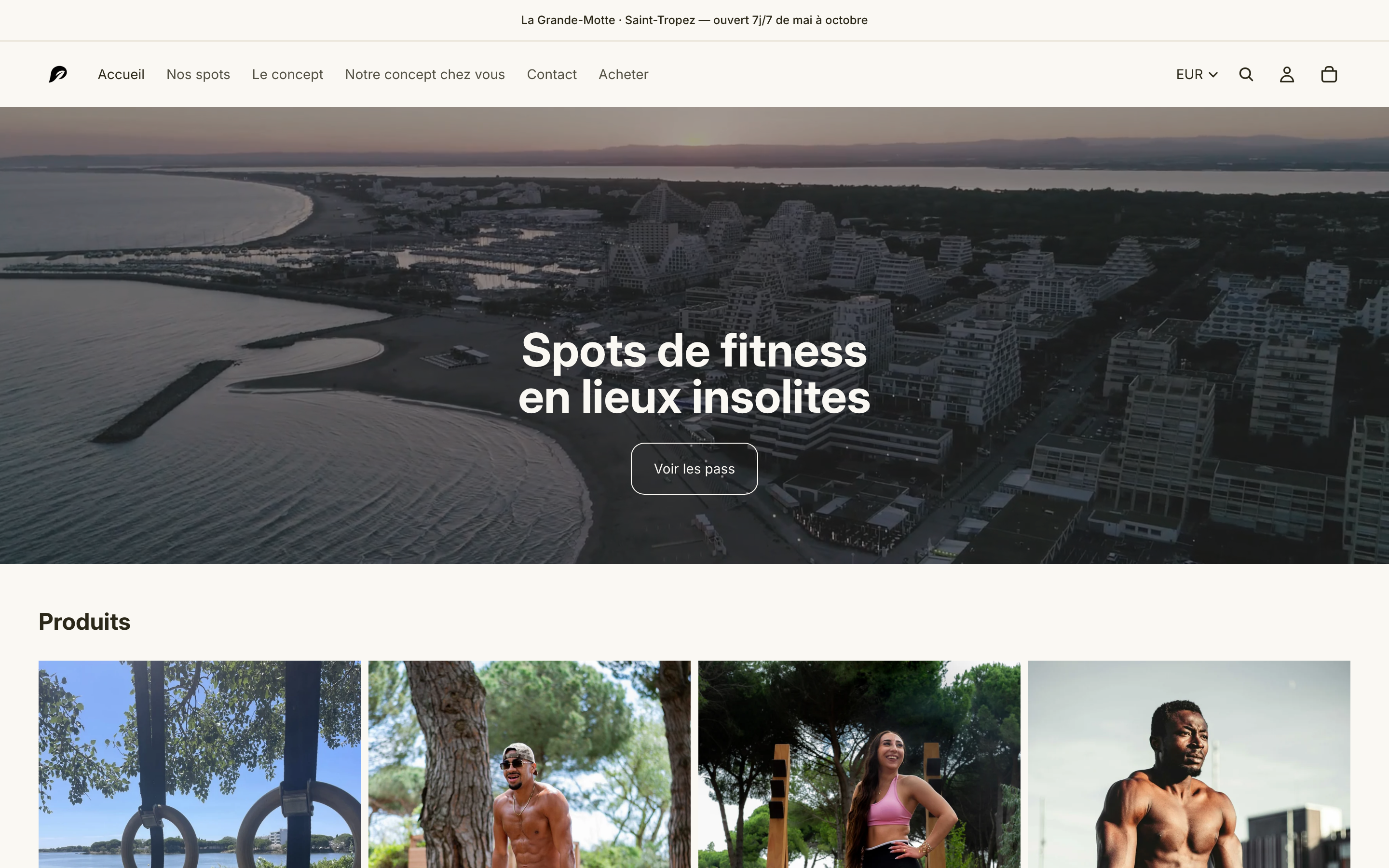
Passes are service products: a single session, a week, a month, a season. No shipping, no stock, one variant per site. Equipment for professional buyers stays off the storefront entirely and is sold by quotation.
The operator view🔗
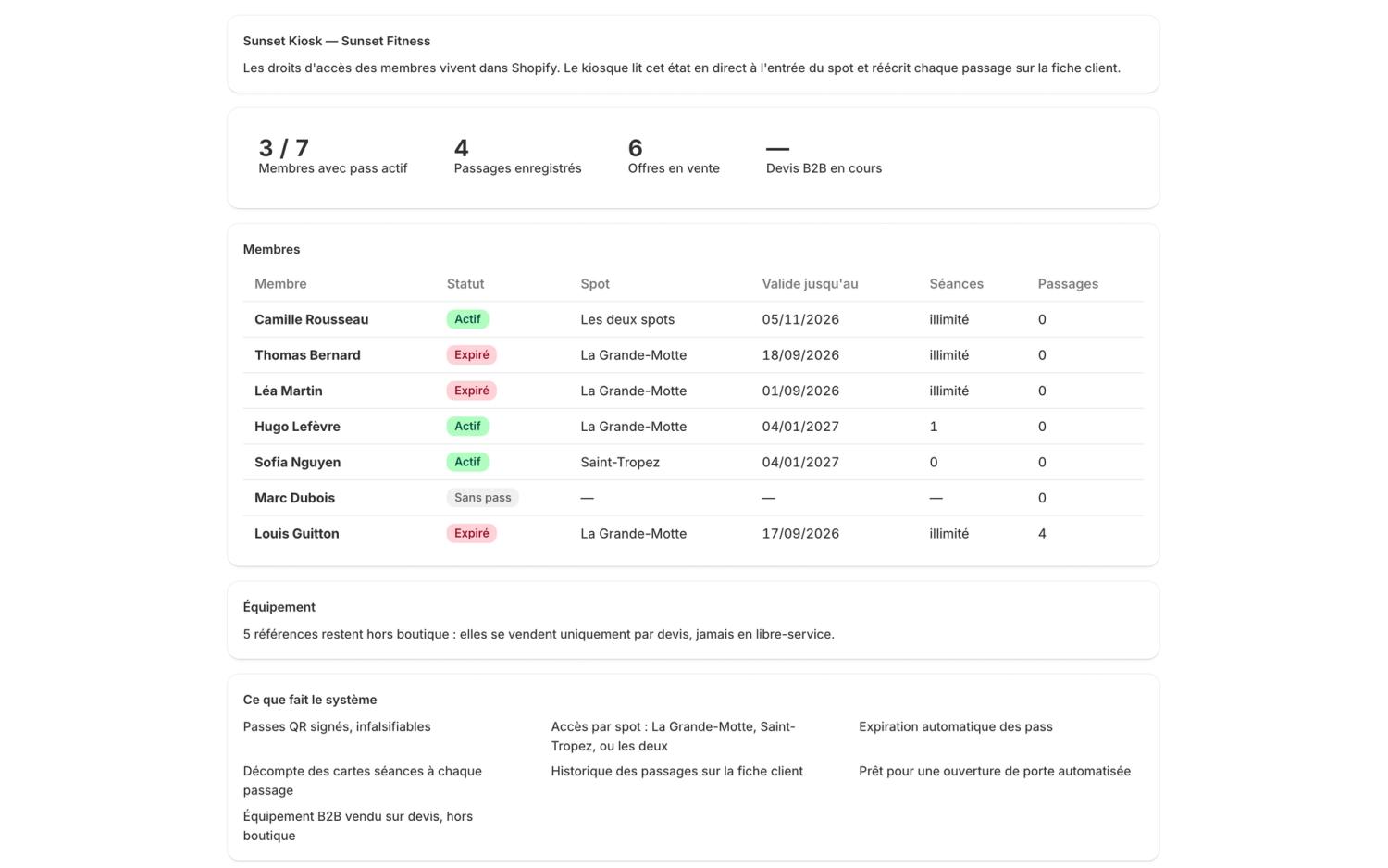
Entitlement lives on the customer record: which sites a pass covers, when it expires, how many sessions remain, and every check-in. Not a separate membership database that has to be kept in step, but a read against the same record that took the payment.
The door🔗
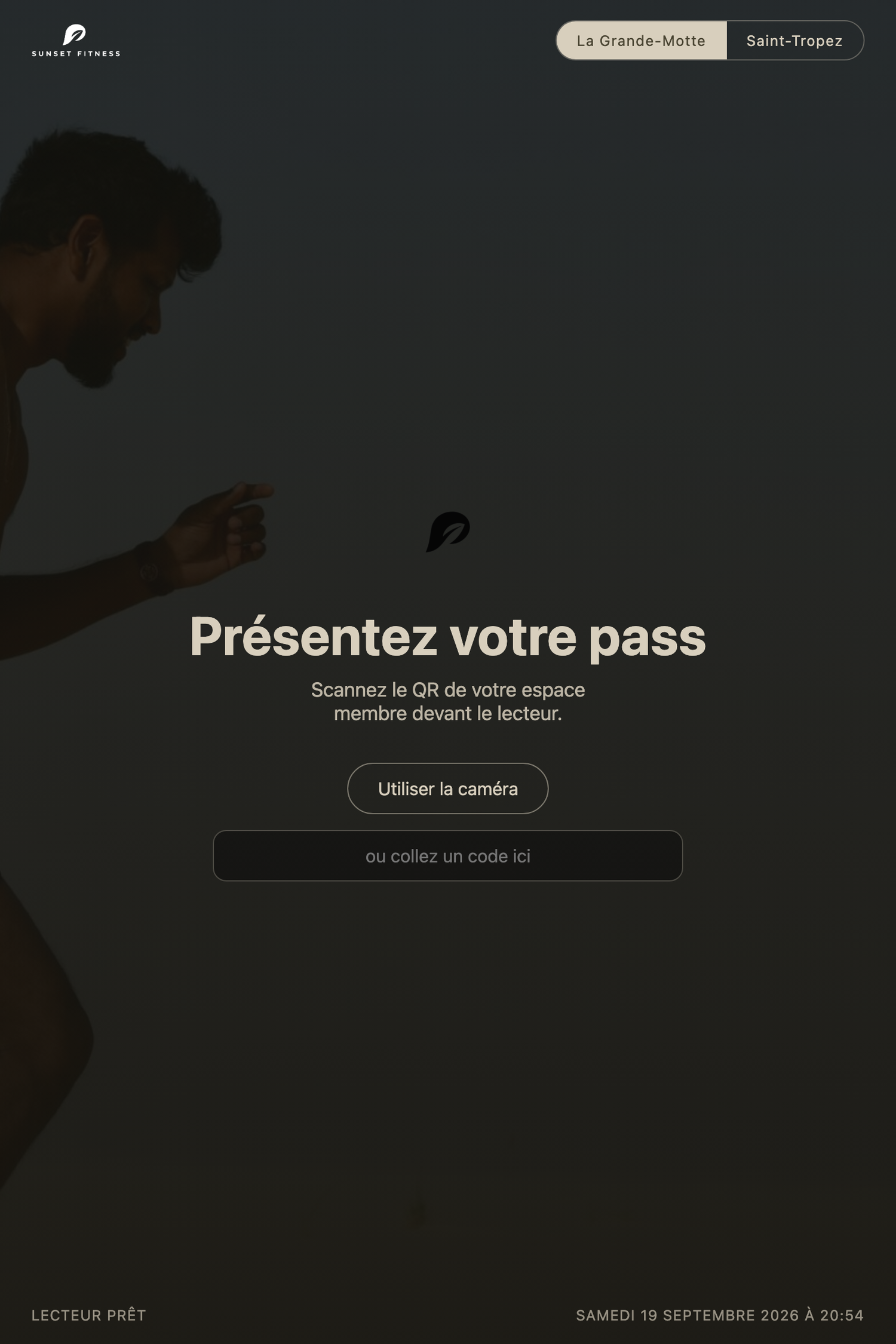
A tablet at each site. A member presents the QR code from their pass, the kiosk resolves entitlement live, shows a full-screen result, releases the door and writes the check-in back to the customer record. The passes are signed, so a screenshot of someone else's does not work.
3. What the approach avoids🔗
3.1 No hardware to buy🔗
The kiosk runs in a browser on a tablet the operator already owns, and the till runs on a phone. Nothing in this demonstrator requires proprietary hardware, because a small operator with two seasonal sites should not be capitalising a terminal per door.
3.2 No second database of members🔗
Every membership platform starts by importing your customers and ends by disagreeing with your commerce platform about who they are. Holding entitlement on the customer record removes the reconciliation rather than automating it.
3.3 The honest limit🔗
Shopify's point of sale is a retail tool. Its advanced tier buys exchanges, saved carts, staff permissions and inventory features, none of which is membership management, recurring entitlement or class scheduling. That gap is precisely the work: the entitlement layer had to be built, and it is what this demonstrator exists to show.
Where an operator genuinely needs class booking, waitlists and instructor rotas, a specialist platform is the right answer and I will say so.
A demonstrator, not a client project
Built speculatively against a real store to answer a real question, with example members and example passes. All three surfaces are running and can be looked at. Nothing here is a mockup, and no figure on this page belongs to a real business.
Selling something that is not an object?
Memberships, passes, entitlements, access. Thirty minutes to look at what you are running today and what one system would take.